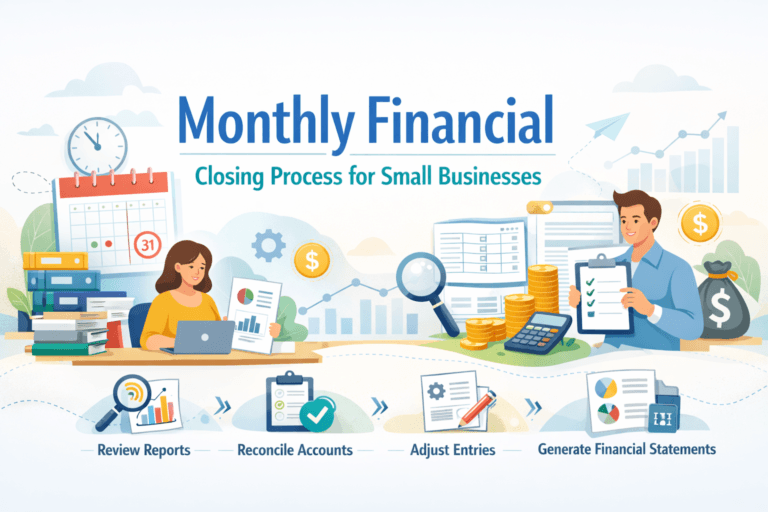

The Silent Killer: Uncontrolled Overheads in Growing Businesses

Growth feels exciting. Revenue is increasing. Customers are expanding. The team is growing.
But behind the scenes, there’s often a hidden problem slowly damaging profitability , uncontrolled overhead costs.
Many growing businesses fail not because of low sales, but because overhead expenses quietly eat away margins. This is why uncontrolled overheads are called the silent killer of growing businesses.
Let’s understand what overheads are, why they become dangerous during growth, and how businesses can control them before they damage financial stability.
What Are Overheads in a Business?
Overheads are ongoing operational expenses that are not directly linked to producing a product or delivering a service.
They include:
- Office rent
- Salaries of administrative staff
- Utilities
- Software subscriptions
- Insurance
- Professional fees
- Marketing retainers
Unlike direct costs (such as raw materials), overheads do not increase proportionally with every sale. However, during growth phases, they often rise aggressively.
When not monitored properly, they quietly reduce profitability.
Why Growing Businesses Lose Control Over Overheads
Growth creates optimism. Optimism often leads to aggressive spending.
Here are common reasons overheads spiral out of control:
1️⃣ Rapid Hiring Without Productivity Tracking
Businesses hire quickly to support growth, but often without clear role definition or performance measurement. Salaries become a heavy fixed cost.
2️⃣ Upgrading Office Infrastructure Too Early
Larger office spaces, expensive interiors, or unnecessary facility upgrades increase fixed expenses long before revenue stabilizes.
3️⃣ Tool & Subscription Overload
As businesses scale, they subscribe to multiple SaaS tools — CRM, HRMS, analytics, marketing platforms — without auditing actual usage.
4️⃣ Poor Budgeting & Cost Forecasting
Without structured financial planning, expenses grow faster than revenue.
Growth without financial discipline creates fragile profitability.
How Do Overheads Impact Profitability?
Overheads directly affect operating margins.
For example:
- Revenue increases by 20%
- But overhead expenses increase by 35%
The result?
Net profit shrinks — even though sales are rising.
This creates a dangerous illusion:
The business appears to be growing, but actual financial health is weakening.
High overheads lead to:
- Reduced cash flow
- Increased burn rate
- Lower investor confidence
- Delayed break-even
- Higher funding dependency
Uncontrolled overheads don’t create immediate crisis — they slowly weaken financial strength.
What Is the Difference Between Fixed and Variable Overheads?
Understanding cost behavior is critical.
Fixed Overheads
These remain constant regardless of sales volume:
- Rent
- Core salaries
- Insurance
- Long-term contracts
These are risky during downturns because they must be paid even if revenue drops.
Variable Overheads
These fluctuate with business activity:
- Performance-based incentives
- Logistics
- Utility usage
A healthy business maintains flexibility by limiting excessive fixed overhead commitments
Why Investors Worry About High Overheads
Investors carefully analyze cost structures.
When overheads are too high, it signals:
- Inefficient resource allocation
- Weak financial control
- Low scalability
- High burn rate
If operating expenses consume most of the revenue, investors question long-term sustainability.
A scalable business should show:
- Improving operating margins
- Cost efficiency over time
- Strong control over fixed expenses
High overhead growth without revenue discipline reduces valuation.
Warning Signs of Uncontrolled Overheads
Businesses often ignore early red flags.
Watch for these signals:
- Operating costs growing faster than revenue
- Declining net margins
- Cash flow tightening despite sales growth
- Increasing reliance on short-term loans
- Budget deviations without corrective action
If these signs appear, immediate financial review is required
How to Control Overheads in a Growing Business
Controlling overheads does not mean cutting essential investments. It means building structured financial discipline.
Here are practical strategies:
1️⃣ Conduct Monthly Expense Reviews
Review every expense category monthly.
Ask:
- Is this expense necessary?
- Does it generate measurable value?
- Can it be optimized?
Small savings across categories significantly improve margins.
2️⃣ Implement Budget Controls
Set annual and quarterly budgets for:
- Hiring
- Marketing
- Administrative expenses
- Technology
Track actual vs projected spending regularly.
Budget discipline prevents emotional spending during growth.
3️⃣ Optimize Fixed Costs
Before committing to long-term contracts:
- Negotiate rental agreements
- Consider flexible work models
- Avoid oversized office commitments
Keep fixed costs lean during expansion.
4️⃣ Measure Employee Productivity
Instead of rapid hiring, evaluate:
- Revenue per employee
- Output metrics
- Role clarity
Smart hiring improves efficiency without bloating overhead.
5️⃣ Automate Financial Monitoring
Use structured financial reporting to track:
- Operating expense ratio
- Cost-to-revenue ratio
- Contribution margins
Automation improves decision-making accuracy.
How Overhead Control Improves Business Stability
When overheads are optimized:
- Profit margins improve
- Cash flow strengthens
- Break-even point lowers
- Business becomes resilient during downturns
- Funding requirement reduces
Controlled overheads increase business valuation and investor trust.
Financial discipline turns growth into sustainable growth.
The Real Risk: Growth Without Financial Structure
Many businesses focus only on revenue growth.
But real success comes from:
Revenue Growth + Cost Discipline + Cash Flow Control
Without overhead management, growth can become financially dangerous.
The goal is not to minimize spending — it is to maximize efficiency.
Conclusion
Uncontrolled overheads rarely cause a sudden collapse. Instead, they quietly erode profitability over time.
Growing businesses must build strong financial oversight alongside expansion strategies.
Revenue growth attracts attention.
Profit discipline builds long-term success.
If your business is scaling rapidly, now is the time to review your overhead structure, before the silent killer impacts your financial health.
Investing in financial leadership early is one of the smartest decisions a startup can make.
Frequently Asked Questions (FAQs)
What are overhead costs in a business?
Overhead costs are ongoing operational expenses not directly tied to production, such as rent, administrative salaries, utilities, and subscriptions
Why do overheads increase during business growth?
Small businesses can speed up the monthly financial closing process by using accounting software, automating reconciliations, maintaining organized documentation, and following a standardized checklist
How do high overheads affect profitability?
When overhead expenses grow faster than revenue, profit margins shrink and cash flow becomes unstable.
How can businesses reduce overhead costs?
Through budget planning, monthly expense reviews, contract negotiations, automation, and productivity monitoring.
Why do investors analyze overhead structure?
Because high fixed overhead reduces scalability, increases burn rate, and signals financial inefficiency.